
Welcome to the Calepin du Vin! Today, we’re exploring a topic that will change the way you view the wines you love: the impact of climate and weather on what you drink. Whether you’re a novice or an enthusiast, this quick read will give you a new perspective on nature’s influence on your wines.
Did you know?
Climate and weather play a vital role in the types of wine you enjoy. These conditions can either enhance the quality of the wine, or pose challenges for the winemaker. Understanding these aspects will enrich your appreciation of wine and help you choose your next bottle with greater confidence.
1. Temperature
Climate and weather play a vital role in the types of wine you enjoy. These conditions can either enhance the quality of the wine, or pose challenges for the winemaker. Understanding these aspects will enrich your appreciation of wine and help you choose your next bottle with greater confidence.
Fun Fact
A warm climate produces a fuller-bodied wine.
A cold climate produces a lighter wine.
2. The “Goldilocks” zones of wine
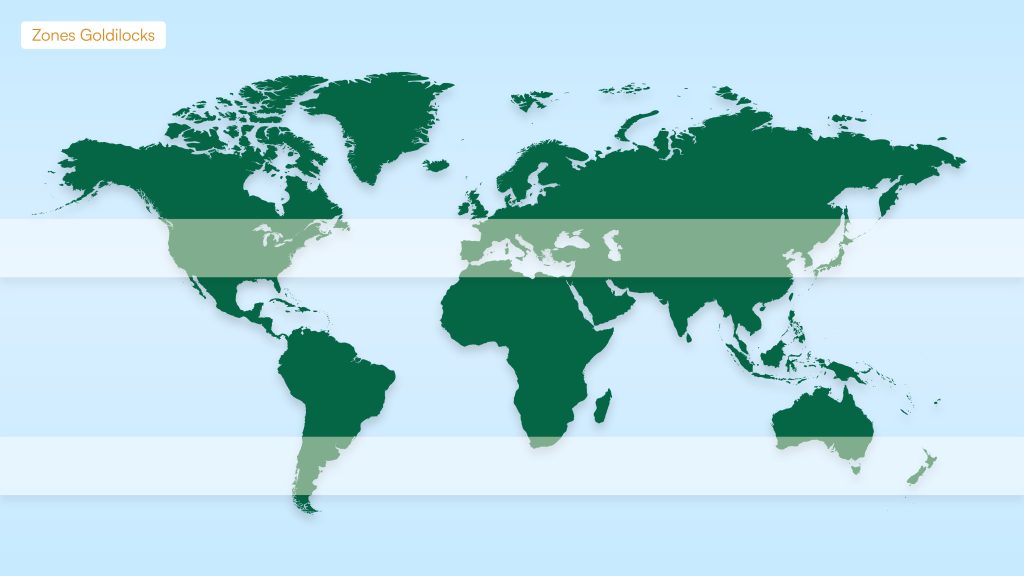
Just as Goldilocks needed everything to be “just right”, vines thrive in a precise climatic range. Too cold, and the grapes won’t mature; too hot, and they risk over-ripening, producing unpleasant flavors. The ideal regions for viticulture are found between 30° and 50° latitude on either side of the equator. These “Goldilocks” zones offer the perfect conditions for producing quality wines.
3. Adapting to Extremes
Vineyards in cooler climates face unique challenges, such as less daylight and shorter growing seasons. To overcome these obstacles, winemakers employ ingenious solutions. They can plant their vines on slopes to capture more sunlight, or orient them to maximize sun exposure. To combat the cold, they can start controlled fires to prevent frost, or cover vines with geothermal blankets during harsh winters. These strategies enable the grapes to reach their full potential, even in difficult conditions.
This overview reveals how climate shapes your wine. The next time you enjoy a glass, you’ll appreciate even more the complex relationship between nature and your favorite bottle. Cheers to expanding your wine knowledge